
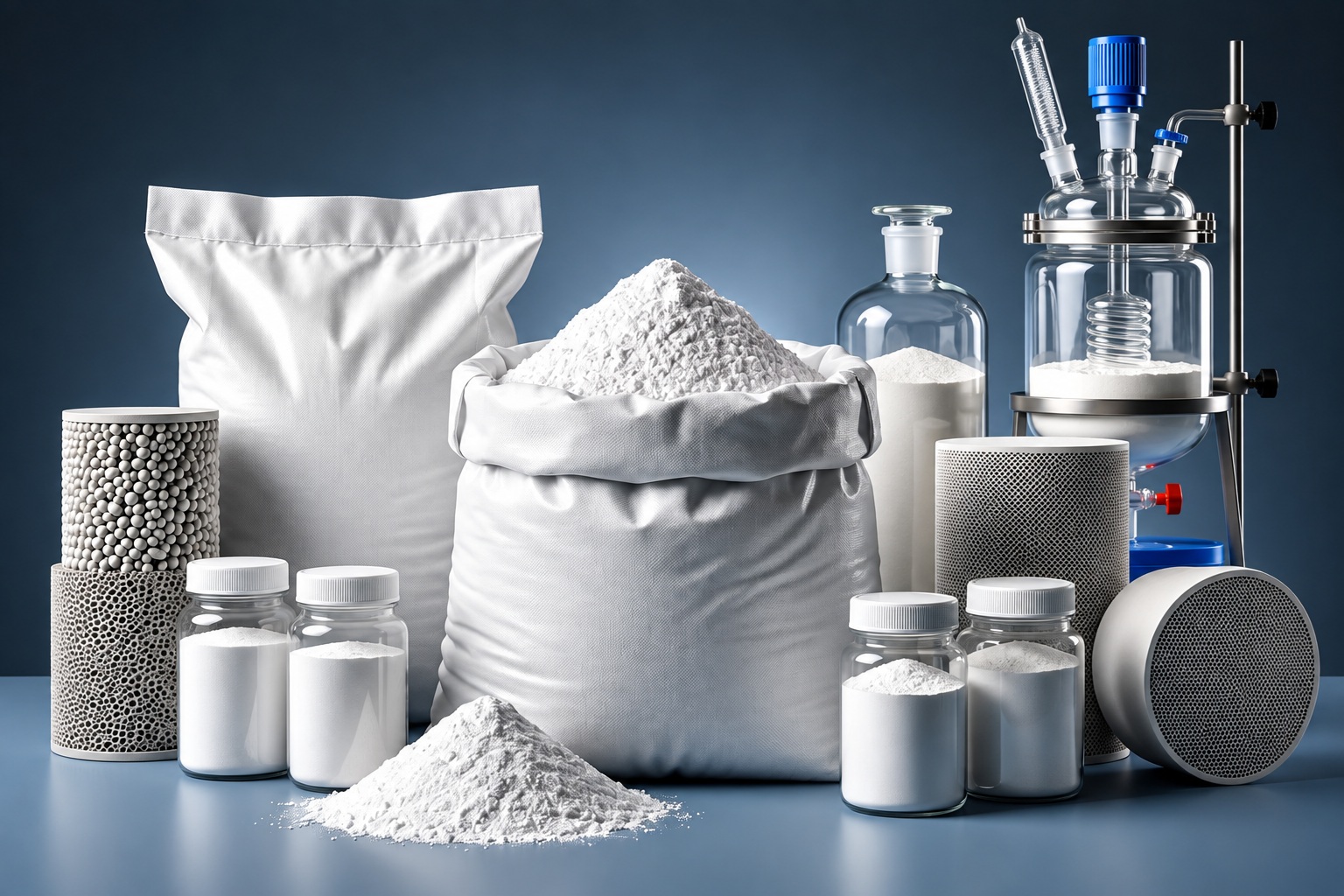
2N+ Calcined Alumina is a high-purity aluminum oxide material produced through controlled thermal treatment of aluminum hydroxide or other suitable alumina precursors. Calcination transforms the precursor into alumina with defined crystal structures and physical characteristics.
Depending on the calcination conditions and subsequent processing, alumina can occur in different transition phases and stable forms. The γ (gamma), δ (delta) and α (alpha) phases have different surface, thermal, structural and mechanical characteristics and are therefore selected for different applications.
The reactive grade is a finely processed form of alumina designed to provide controlled particle packing, rheology and sintering behaviour. Reactive alumina is particularly important in high-performance refractory systems and advanced ceramic processing. :contentReference[oaicite:1]{index=1}
- High-purity Aluminum Oxide: Suitable for applications requiring controlled alumina chemistry.
- Multiple Crystal Phases: Available in γ, δ and α alumina forms according to the required application.
- Controlled Calcination: Thermal processing provides control over crystal phase and material characteristics.
- Excellent Thermal Stability: Alumina provides strong thermal performance in high-temperature environments.
- High Hardness: Particularly important for α-alumina-based abrasives, ceramics and wear-resistant materials.
- Reactive Grade: Fine reactive alumina can provide controlled packing, rheology and sintering behaviour in refractory systems. :contentReference[oaicite:2]{index=2}
| Property | Specification / Description |
|---|---|
| Product Name | 2N+ Calcined Alumina |
| Chemical Name | Aluminum Oxide |
| Chemical Formula | Al2O3 |
| Purity Grade | 2N+ |
| Crystal Phases | γ, δ, α |
| Reactive Grade | Available according to application requirements |
| Appearance | White Powder |
| Thermal Stability | Excellent |
| Primary Function | High-purity alumina raw material for advanced applications |
| Phase | Key Characteristics | Typical Applications |
|---|---|---|
| γ-Alumina | High surface area and porous transition-alumina structure | Catalyst supports, adsorbents, catalysts and specialty materials |
| δ-Alumina | Transition alumina with high-temperature stability | Specialty ceramics, catalyst-related materials and advanced applications |
| α-Alumina | Stable crystalline phase with high hardness, thermal stability and chemical resistance | Technical ceramics, refractories, abrasives, wear parts and electrical insulation |
| Reactive Alumina | Fine-ground alumina designed for controlled particle packing, rheology and sintering | High-performance castables, gunning, shotcrete, bricks and advanced refractory systems |
Major Applications
- Advanced Ceramics: Used as a high-purity raw material for technical and advanced ceramic components.
- Refractories: Used in refractory formulations requiring thermal stability, strength and wear resistance.
- Technical Ceramics: Suitable for ceramic components requiring controlled particle characteristics and high purity.
- Electrical Insulation: Alumina is widely used in ceramic electrical insulation applications.
- Wear-resistant Materials: α-alumina is suitable for high-hardness and wear-resistant components.
Specialty Applications
- Catalyst Supports: Transition alumina phases, particularly γ-alumina, are used in catalyst support applications.
- Polishing: Alumina powders are used as abrasive and precision polishing materials.
- High-performance Castables: Reactive alumina is used to improve particle packing and rheological behaviour in refractory matrices. :contentReference[oaicite:3]{index=3}
- Gunning & Shotcrete: Reactive alumina is used in high-performance refractory mixes. :contentReference[oaicite:4]{index=4}
- Ceramic Glazes: Calcined alumina can be used in selected glaze and ceramic formulations.
Reactive alumina is a finely processed form of calcined alumina designed for high-performance refractory and ceramic applications. Fine particle characteristics can improve packing density, rheology and processing behaviour while supporting sintering and the development of dense ceramic structures. :contentReference[oaicite:5]{index=5}
- Controlled Particle Packing: Helps optimize the particle distribution within refractory matrices.
- Improved Rheology: Fine reactive particles can influence flow and placement characteristics.
- Reduced Water Demand: Properly engineered reactive alumina can help reduce water requirements in certain castable formulations. :contentReference[oaicite:6]{index=6}
- Enhanced Sintering: Fine alumina particles contribute to microstructural development during firing.
- High-purity Alumina: Suitable for applications requiring controlled aluminum oxide chemistry.
- Phase Flexibility: Different alumina phases can be selected according to the application.
- Thermal Stability: Suitable for high-temperature ceramic and refractory environments.
- High Hardness: α-alumina provides excellent hardness and wear resistance.
- Chemical Resistance: Alumina provides strong resistance to many chemical environments.
- Wide Application Range: Suitable for ceramics, refractories, catalysts, abrasives, polishing and specialty materials.
Selection of calcined alumina depends on factors such as crystal phase, particle-size distribution, surface area, soda content, morphology and degree of calcination. These parameters influence sintering behaviour, packing, rheology, thermal performance and the properties of the final product. :contentReference[oaicite:7]{index=7}
For sensitive applications, product-specific parameters such as Al2O3 purity, Na2O, SiO2, Fe2O3, D50, D90, BET, alpha-phase content and moisture should be selected according to the applicable Attaquant Global grade specification.
2N+ Calcined Alumina provides a versatile high-purity aluminum oxide platform with different crystal-phase and particle characteristics for specialized applications. The combination of controlled calcination and subsequent particle processing allows the material to be adapted to requirements ranging from advanced ceramics and refractories to catalysts, polishing and specialty materials.
Reactive grades provide additional flexibility for high-performance refractory formulations, where particle packing, rheology and sintering behaviour are important to the performance of the final castable or ceramic structure. :contentReference[oaicite:8]{index=8}
Contact our team to discuss your requirements for 2N+ Calcined Alumina (γ, δ, α & Reactive), including crystal phase, particle size, surface area, purity, soda content and application-specific requirements.