
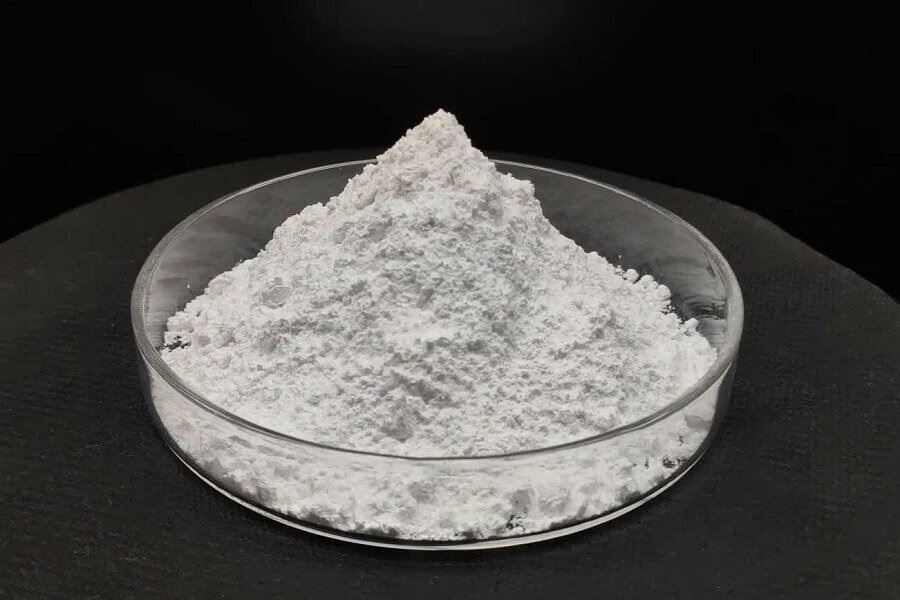
Zeolites and molecular sieves are crystalline microporous materials widely used for adsorption, molecular separation, drying, purification and catalytic processes. Their controlled pore structures and surface chemistry allow selected molecules to enter and interact within the zeolite framework.
Attaquant Global Pvt. Ltd. offers a range of zeolite and molecular sieve materials for industrial applications, including ZSM-5, SAPO-34, 13X, 4A and 3A. Each material provides different pore structures, selectivity and adsorption or catalytic characteristics.
Molecular sieve selection depends on the molecules being treated, process conditions, required adsorption capacity, separation requirements and whether the material is being used as an adsorbent, drying medium or catalyst.
- Microporous Structure: Precisely defined pore systems allow molecular adsorption and selective separation.
- Molecular Selectivity: Different pore openings allow specific molecules to be preferentially adsorbed or excluded.
- High Adsorption Performance: Molecular sieves provide effective adsorption of water and selected contaminants.
- Thermal Stability: Zeolite materials can be used in demanding industrial adsorption and catalytic processes.
- Regenerability: Many molecular sieve systems are designed for cyclic adsorption and regeneration.
- Catalytic Activity: Selected zeolites such as ZSM-5 and SAPO-34 are important catalyst materials.
| Zeolite | Material Type | Primary Characteristics | Typical Applications |
|---|---|---|---|
| ZSM-5 | Zeolite / Molecular Sieve | Medium-pore zeolite with strong shape-selective catalytic characteristics | Catalysis, petrochemicals, hydrocarbon processing and specialty chemical processes |
| SAPO-34 | Silicoaluminophosphate Molecular Sieve | Small-pore molecular sieve with strong shape-selective catalytic behaviour | Methanol-to-olefins and catalytic conversion processes |
| 13X | Type X Molecular Sieve | Large-pore zeolite with high adsorption capacity | Gas purification, drying, oxygen generation, natural gas, petrochemical and refining |
| 4A | Type A Molecular Sieve | General-purpose molecular sieve for moisture and selected molecular adsorption | Gas and liquid drying, petrochemicals, solvents and industrial purification |
| 3A | Potassium-exchanged Type A | Highly selective molecular sieve primarily used for moisture adsorption | Gas drying, refrigerants, natural gas, ethanol, hydrocarbons and insulated glass |
ZSM-5 is a crystalline aluminosilicate zeolite known for its shape-selective catalytic properties. Its microporous framework provides access to molecules according to their molecular size and structure.
ZSM-5 is widely associated with petrochemical and hydrocarbon conversion processes and can be used in catalytic applications where selectivity and controlled molecular diffusion are important.
- Petrochemical Processing: Used in selected hydrocarbon conversion processes.
- Catalytic Cracking: Suitable for selected catalytic hydrocarbon transformation processes.
- Aromatics Production: Used in catalytic processes involving aromatic hydrocarbons.
- Shape-selective Catalysis: Its pore structure provides molecular selectivity during catalytic reactions.
SAPO-34 is a silicoaluminophosphate molecular sieve with a small-pore framework. It is particularly important in catalytic conversion processes because of its molecular shape selectivity.
SAPO-34 is widely associated with Methanol-to-Olefins (MTO) technology, where methanol is converted into light olefins such as ethylene and propylene. Commercial MTO processes use SAPO-34-based catalysts for this conversion. :contentReference[oaicite:1]{index=1}
- Methanol-to-Olefins: Important catalyst material for MTO processes.
- Light Olefin Production: Supports production of valuable olefins including ethylene and propylene.
- Shape Selectivity: Small-pore structure influences molecular diffusion and product selectivity.
- Catalytic Conversion: Suitable for specialized hydrocarbon and chemical conversion processes.
13X molecular sieve is a sodium form of zeolite X with a larger pore opening than Type A molecular sieves. It provides high adsorption capacity and is capable of adsorbing water, oxygenates, carbon dioxide and selected sulfur compounds.
Because of its larger pore structure, 13X can accommodate molecules that cannot readily enter the smaller Type A molecular-sieve structures. It is therefore used in a variety of gas purification and separation processes. :contentReference[oaicite:2]{index=2}
- Gas Purification: Used for purification and drying of industrial gas streams.
- Oxygen Generation: Used in selected PSA oxygen-generation systems.
- Natural Gas Processing: Used for removal of moisture and selected impurities.
- Petrochemical Processing: Used for selected purification and adsorption applications.
- Solvent Treatment: Suitable for selected solvent drying and purification processes.
4A molecular sieve is the sodium form of Type A zeolite and is widely used as a general-purpose drying and adsorption material. Its pore structure allows adsorption of water and selected small molecules.
4A molecular sieves are commonly used where reliable moisture removal is required from gas or liquid streams and where the process chemistry is compatible with Type A molecular sieves. :contentReference[oaicite:3]{index=3}
- Gas Drying: Removal of moisture from industrial gas streams.
- Liquid Drying: Used for selected liquid and solvent drying applications.
- Petrochemicals: Suitable for selected hydrocarbon purification processes.
- Solvent Drying: Used for moisture removal from compatible solvent systems.
3A molecular sieve is produced by exchanging sodium in Type A zeolite with potassium. Its smaller effective pore opening makes it highly selective for water, while excluding many larger molecules.
This selectivity makes 3A particularly useful for dehydration and moisture removal where adsorption of larger process molecules is undesirable. :contentReference[oaicite:4]{index=4}
- Gas Dehydration: Used for removing moisture from gas streams.
- Natural Gas: Used in selected natural-gas drying applications.
- Refrigerant Drying: Suitable for moisture removal from refrigerant systems.
- Ethanol Dehydration: Used in selected ethanol drying processes.
- Hydrocarbon Drying: Suitable for drying applications where selective water adsorption is required.
- Insulated Glass: Used as a moisture-control desiccant in insulating glass applications.
| Material | Main Function | Typical Application Focus |
|---|---|---|
| ZSM-5 | Catalysis & molecular selectivity | Petrochemical and hydrocarbon conversion |
| SAPO-34 | Shape-selective catalysis | Methanol-to-olefins and catalytic conversion |
| 13X | High-capacity adsorption | Gas purification, drying, oxygen generation and hydrocarbon treatment |
| 4A | General-purpose adsorption and drying | Gas, liquid and solvent drying |
| 3A | Selective water adsorption | Gas dehydration, refrigerants, ethanol and hydrocarbon drying |
Adsorption & Drying
- Natural Gas Drying
- Industrial Gas Drying
- Solvent Drying
- Refrigerant Drying
- Hydrocarbon Dehydration
- PSA Gas Separation
Catalysis & Processing
- Petrochemical Processing
- Hydrocarbon Conversion
- Methanol-to-Olefins
- Catalyst Protection
- Gas Purification
- Specialty Chemical Processing
- Oil & Gas
- Petrochemical Industry
- Natural Gas Processing
- Refineries
- Chemical Processing
- Industrial Gas
- Solvent & Chemical Manufacturing
- Refrigeration & Insulated Glass
- Advanced Materials
- Specialty Catalysis
Molecular sieve selection should be based on the composition of the process stream, target contaminants, molecular size, operating temperature, pressure, moisture loading, regeneration conditions and required adsorption performance.
Important product parameters may include crystal structure, pore opening, adsorption capacity, particle size, bulk density, crush strength, moisture content, attrition resistance and regeneration characteristics.
For catalytic applications, additional parameters such as silica-to-alumina ratio, acidity, crystal size, framework composition and catalytic selectivity may be relevant depending on the specific zeolite grade and process.
- Selective Adsorption: Molecular sieve structures can selectively adsorb molecules based on size and polarity.
- High Adsorption Capacity: Suitable grades can provide strong adsorption performance for targeted contaminants.
- Controlled Molecular Separation: Pore dimensions enable selective molecular diffusion and separation.
- Regenerative Operation: Many industrial molecular sieve systems operate through repeated adsorption and regeneration cycles.
- Wide Application Range: Zeolites are used across gas processing, petrochemicals, refining, chemicals and specialty applications.
- Catalytic Performance: Selected zeolite structures provide important catalytic properties for chemical conversion.
Attaquant Global Pvt. Ltd. provides specialty alumina, adsorbent and molecular-sieve solutions for demanding industrial applications.
Our zeolite portfolio covers different adsorption and catalytic requirements, allowing material selection according to molecular size, adsorption target, drying requirement, purification process and catalytic application.
From moisture removal and gas purification to petrochemical processing and catalytic conversion, the appropriate molecular sieve grade can be selected according to the process conditions and performance requirements.
Contact our team to discuss your requirements for ZSM-5, SAPO-34, 13X, 4A or 3A molecular sieves.
Share your application, process stream, target contaminants, operating conditions and required particle form so that the appropriate material specification can be evaluated.